
What Are the Signs My Furnace Needs to Be Replaced? (Don't Wait Until It Quits)
You're Worried Your Furnace Is on Its Last Legs (And You're Probably Right)
Your furnace has been acting strange lately. Maybe it's making noises you've never heard before, or your heating bills keep climbing even though you haven't changed your thermostat settings. Perhaps some rooms are freezing while others are fine, or you've called for repairs twice already this year.
Now you're lying awake at night wondering: Is this furnace going to make it through another Rochester winter, or am I going to wake up to no heat on the coldest day of the year?

Here's what makes this decision so stressful - you don't want to spend thousands on a new furnace if yours still has a few good years left. But you also don't want to keep throwing money at repairs for a system that's ready to die anyway.
The good news is that your furnace usually gives you clear warning signs before it completely fails. Once you know what to look for, you can make a smart decision about whether to repair or replace - before you're forced into an emergency situation in the middle of January.
The 8 Clear Signs Your Furnace Needs Replacement
1. Your Furnace Is 15-20 Years Old (Or You Have No Idea How Old It Is)
The short answer: If your furnace is 15 years or older, replacement should be on your radar, especially if you're having any other issues.
Here's why age matters:
Most furnaces last 15-20 years with proper maintenance. Once yours crosses that 15-year threshold, you're living on borrowed time. Even if it's still working, it's losing efficiency every year, costing you more to run, and likely to need expensive repairs at any moment.
Here in Rochester, where furnaces work hard for 5-6 months every year, they often wear out closer to the 15-year mark rather than 20. The constant cycling through brutal cold winters takes a toll.
If you don't know how old your furnace is, look for a manufacturing date on the label inside the unit, or call us - we can usually tell by the model number. If you bought your house and have no idea when the furnace was installed, it's worth finding out.
What you should do: If your furnace is 12-15 years old and working fine, start planning and saving for replacement. If it's over 15 and having problems, replacement almost always makes more financial sense than major repairs.
2. Your Heating Bills Keep Going Up (Even Though Nothing Else Changed)
The short answer: Rising heating bills without increased usage means your furnace is losing efficiency and working harder to heat your home.
Here's what's happening:
When furnaces age, they lose efficiency. Parts wear out, heat exchangers develop cracks, blower motors weaken, and the whole system has to work harder and run longer to maintain the same temperature. That extra runtime shows up on your energy bill every month.
If you're paying 20-30% more for heat than you were a few years ago, even accounting for rate increases, your furnace is probably running at 70-80% efficiency instead of the 90-95% it should be. Modern high-efficiency furnaces can cut your heating costs by 20-30% compared to an old, inefficient system.
Over a Rochester winter, those savings add up to hundreds of dollars - sometimes enough to offset much of the cost of a new furnace over its lifetime.
What you should do: Compare your heating bills from the last few years. If they're trending upward significantly, have your furnace's efficiency tested. A new, efficient furnace might actually pay for itself through energy savings over time.
3. You've Had Multiple Repairs in the Past Two Years
The short answer: If you've needed two or more service calls in the past couple of years, your furnace is telling you it's wearing out.
Here's the pattern we see:
Furnaces rarely die all at once. Instead, they fail piece by piece. First the ignitor goes, then the blower motor, then the limit switch, then the gas valve. Each repair costs $200-800, and before you know it, you've spent $2,000 on repairs for a 16-year-old furnace that's still limping along.
The problem is that when one major component fails, it often means other components are close behind. If your furnace needed a $600 repair last year and another $400 repair this year, that's $1,000 you've spent that could have gone toward a new system.
The 50% rule: If your next repair costs more than 50% of what a new furnace would cost, replacement is almost always the smarter choice financially.
What you should do: Keep track of every repair bill. Add them up over the past 2-3 years. If you're spending $500+ annually on repairs for an older furnace, stop throwing good money after bad and invest in a new system.
4. Some Rooms Are Always Cold While Others Are Too Warm
The short answer: Uneven heating throughout your home often means your furnace can't distribute heat properly anymore.
Here's what causes this:
When furnaces age, their blower motors weaken and can't push air through your ductwork as effectively. You might notice that rooms farthest from the furnace never quite warm up, or that your second floor is freezing while your first floor is comfortable.
Sometimes this is a ductwork issue, but if your ducts worked fine for years and suddenly rooms are cold, your furnace is likely the culprit. A weakening blower motor, failing heat exchanger, or other aging components can't maintain consistent temperatures throughout your home.
You might try to compensate by cranking up the thermostat, but that just makes your furnace run longer and costs you more money without actually solving the problem.
What you should do: If you've always had even heating and suddenly don't, have your furnace inspected. If the blower motor or other major components are failing, replacement often makes more sense than expensive repairs on an aging system.
5. Your Furnace Is Making Loud, Unusual Noises
The short answer: While some sounds are normal, loud banging, screeching, or rumbling means something is seriously wrong and could indicate your furnace is failing.
Here's what different sounds mean:
Loud banging or booming when starting: This is delayed ignition - gas builds up before igniting, causing a small explosion. This is dangerous and means your burner or ignition system is failing.
Screeching or squealing: Your blower motor bearings are wearing out. The motor is on its way to complete failure, and replacing motors in older furnaces often costs $800-1,500.
Rattling or clanking: Loose or broken parts inside the furnace. Sometimes it's a simple fix, but in older systems, it often means components are deteriorating.
Rumbling after the furnace shuts off: Could indicate a cracked heat exchanger, which is a serious safety issue that requires immediate replacement.
A gentle whoosh when starting is normal. Everything else deserves attention, and on an older furnace, these sounds often signal it's time to replace rather than repair.
What you should do: Never ignore loud or unusual furnace noises, especially banging or rumbling. Have it inspected immediately for safety, and be prepared for replacement recommendations if the furnace is older than 12-15 years.
6. You See Visible Rust, Cracks, or Corrosion
The short answer: Visible deterioration of your furnace cabinet, heat exchanger, or flue pipe means your furnace is at the end of its life.
Here's why this matters:
Rust and corrosion don't just appear cosmetically - they indicate that critical components are breaking down. A rusted heat exchanger can crack and leak carbon monoxide into your home, which is deadly. Corroded burners don't heat efficiently and can fail completely.
If you see rust streaks on the furnace cabinet, water pooling around the base, or corrosion on the flue pipe, your furnace has been deteriorating for a while. These aren't problems you can repair away - they indicate systemic failure of the unit.
What you should do: Any visible rust or corrosion on an older furnace is a strong signal to replace it. Don't wait for a complete failure or safety issue.
7. Your Furnace Runs Constantly But Your House Isn't Warm Enough
The short answer: If your furnace runs non-stop but can't maintain your set temperature, it no longer has the capacity to heat your home properly.
Here's what's happening:
Furnaces lose heating capacity as they age. The heat exchanger develops cracks, burners clog with deposits, and overall efficiency drops. Your furnace runs constantly trying to reach your thermostat setting but can never quite get there.
This constant operation is terrible for the equipment (causing faster wear) and expensive for you (higher energy bills). It also means your furnace is already undersized for your needs, either because it's worn out or because it was borderline adequate to begin with.
When a furnace can't keep up with demand during Rochester's cold winters, you're not just uncomfortable - you're at risk of the system failing completely when you need it most.
What you should do: If your furnace runs continuously and your house won't warm up, especially on very cold days, it's time for replacement. A struggling furnace won't magically get better - it will only get worse.
8. You See a Yellow or Flickering Flame Instead of Blue
The short answer: A yellow or flickering burner flame means incomplete combustion, which produces carbon monoxide. This is a safety emergency that usually requires furnace replacement.
Here's why this is serious:
A properly working gas furnace should have a steady blue flame. A yellow, orange, or flickering flame means the fuel isn't burning completely, which produces carbon monoxide - an odorless, colorless gas that can kill you and your family.
This happens when the heat exchanger cracks, the burner assembly deteriorates, or there are ventilation problems. In older furnaces, these are usually not repairable issues - the core components have failed.
If you see a yellow flame, shut off your furnace immediately, leave your home if anyone feels dizzy or nauseous, and call for emergency service. Don't use your furnace again until it's been inspected.
What you should do: Yellow flames are never normal and always require immediate professional attention. In most cases with older furnaces, replacement is the only safe solution.
How Much Does Furnace Replacement Cost in Rochester?
The realistic answer: $2,400-$5,700 for most homes, depending on size, efficiency, and complexity.
Here's what affects the cost:
System size: Larger homes need larger furnaces, which cost more.
Efficiency rating: A basic 80% efficiency furnace costs less than a 95%+ high-efficiency model, but the high-efficiency model saves money on energy bills long-term.
Fuel type: Gas furnaces are most common in Rochester. Electric or oil systems have different pricing.
Installation complexity: Replacing a furnace in an easy-to-access basement is straightforward. Installing in a tight crawl space or making ductwork modifications costs more.
Additional work needed: If your ductwork needs repairs, your thermostat needs upgrading, or you need new venting, that adds to the cost.
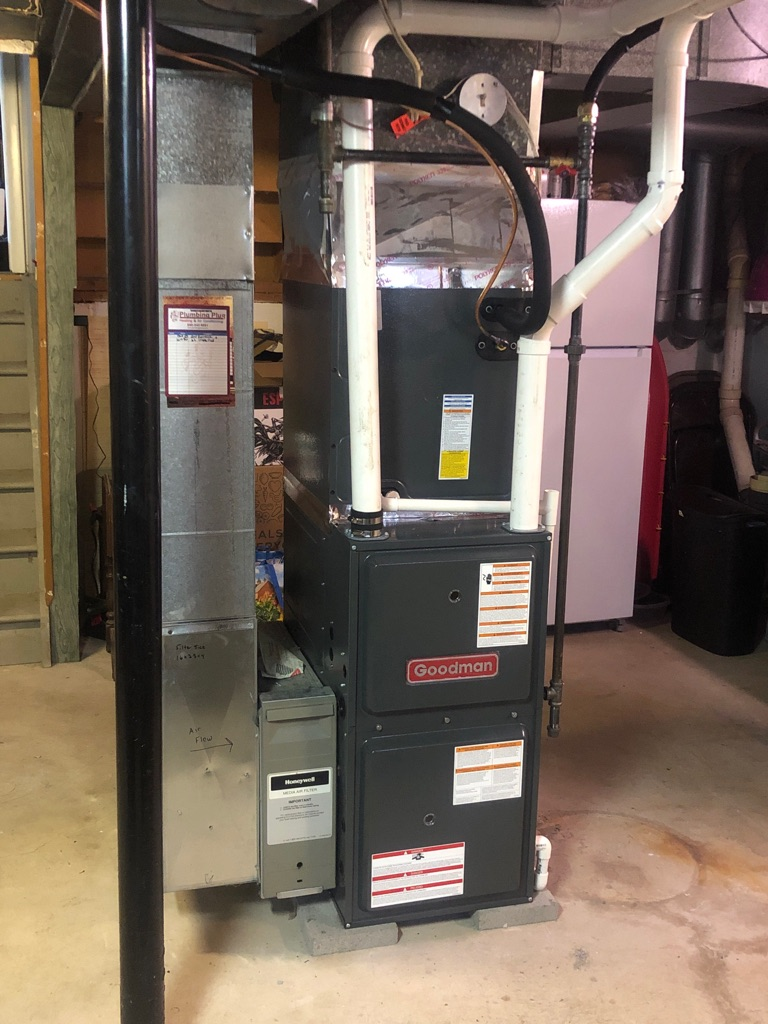
While this might seem expensive, remember that a new furnace lasts 15-20 years, saves 20-30% on heating bills, needs fewer repairs, and gives you reliable heat through Rochester winters. When you break down the cost over its lifespan, it's often more affordable than continuing to repair an old system.
Repair vs. Replace: The Simple Decision Framework
Repair if:
Your furnace is under 10 years old
The repair costs less than $500
You haven't needed frequent repairs
Your heating bills are reasonable
No safety issues are present
Replace if:
Your furnace is 15+ years old
Repair costs exceed $1,500 or 50% of replacement cost
You've had 2+ repairs in the past two years
Your bills keep increasing
You see any safety warning signs (yellow flame, carbon monoxide, cracked heat exchanger)
Your furnace can't keep up with heating demand
Don't Wait for a Crisis
The worst time to replace your furnace is when it fails completely on the coldest day of winter. Emergency replacements are stressful, expensive, and force you to make rushed decisions when you're desperate for heat.
The best time is when you recognize the warning signs and can plan the replacement on your schedule, compare options, possibly take advantage of off-season pricing, and ensure your family never goes without heat.
We'll Give You an Honest Assessment
At Wischmeyer's Plumbing Plus, we've been helping Rochester homeowners make repair vs. replace decisions for over 35 years. We've seen furnaces that should have been replaced years ago and others that were replaced too soon.
We'll never try to sell you a new furnace if yours has good years left. But we'll also be honest with you when your furnace is at the end of its life and repairs don't make financial sense.
Wondering if it's time to replace your furnace? Call us today for a thorough inspection. We'll assess your system honestly, explain exactly what condition it's in, and help you understand your options - whether that's repair, replacement, or just keeping an eye on things for now.
Quick FAQ:
How long should a furnace last in Rochester? With proper maintenance, 15-20 years. Rochester's harsh winters can push furnaces toward the lower end of that range.
Can I replace just the furnace or do I need a new AC too? You can replace just the furnace, but if your AC is also 12+ years old, replacing them together often saves money on installation costs.
What's the most efficient furnace I can buy? High-efficiency furnaces reach 95-98% AFUE ratings. These cost more upfront but save significantly on heating bills over time.
Will a new furnace really lower my heating bills? Yes. If your current furnace is 15+ years old, a new high-efficiency model can reduce heating costs by 20-30% or more.
How long does furnace installation take? Most straightforward replacements take 4-8 hours. More complex installations might take a full day.
Wischmeyer's Plumbing Plus has been providing honest furnace repair and replacement services to Rochester homeowners for over 35 years. From helping you decide whether to repair or replace to expert installation of new systems, we're here to keep your home warm all winter long.
[Schedule a Furnace Inspection] | [Call: 585-342-9251]


Comments